
Get the job before you promise an hour.
When a request arrives
Customer relationship, address, type of equipment, symptom and photos provided. Distinguish an initial review of an already budgeted repair; confirm access, contact and care window.
Drometra SOLO · Home technicians
Order the visit, the team you're going to check out, and what you need to carry.
Check my way of working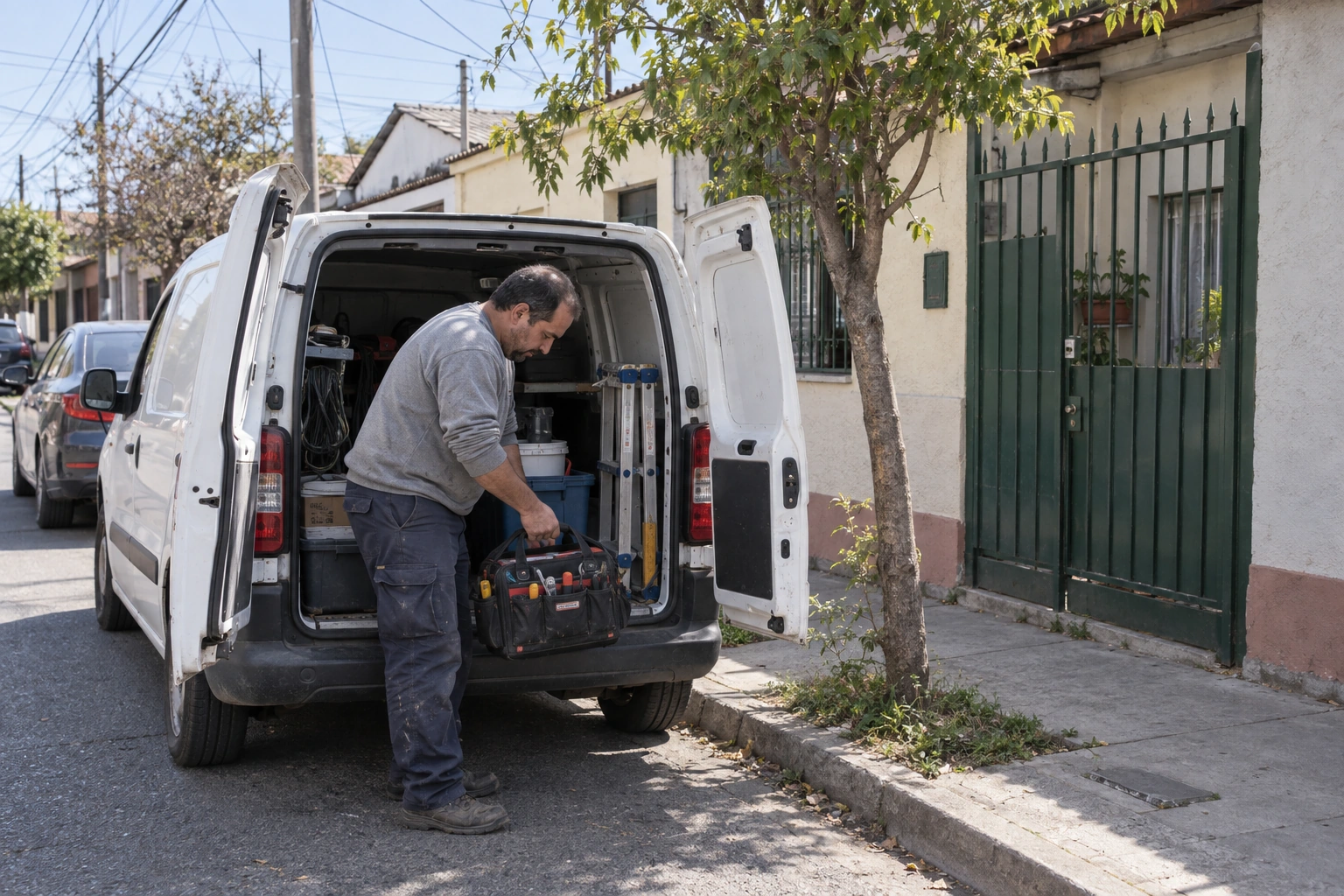
A call comes in while you finish another repair. The address is left in the chat, the photo of the equipment in another message and the spare, in your memory. SOLO is designed to gather that work around your truck and every visit, without requiring an dispatch centre.
When a request arrives
Customer relationship, address, type of equipment, symptom and photos provided. Distinguish an initial review of an already budgeted repair; confirm access, contact and care window.
Before departure
Check tools, planned spare parts and service time. Group compatible visits, but let the duration of work - not just the distance - define what is left in your day.
At the customer's address
Conserves finding, intervention, materials and observations. If an additional work appears, it separates the proposal from what the client already authorized and records its decision before continuing.
When completing the job
A piece to get may require another visit. It links that return to the original work, with responsibility and motive; difference work done, customer acceptance and registered payment.
The client requests to review a leak and provides photos. The first quote is scheduled as a diagnosis, not as a complete repair.
In the field, a different piece is identified from the one planned. The observation is left and an additional work is prepared for review by the customer.
The review is documented; the repair remains pending and the next visit. The service is not presented as solved because the vehicle returned to the base.
An illustrative example, it's not a testimony.
The informed failure, previous visits and what was left pending before the bell was replayed.
The planned, used and additional, with reference to the corresponding approval.
What a new job is, and which one is going on before. You can check how many visits they required to return and why.
Choose a regular service and check what information you need, who decides and how you know it ended.
Check the scope of SOLO and tell us what you need to organize first.